
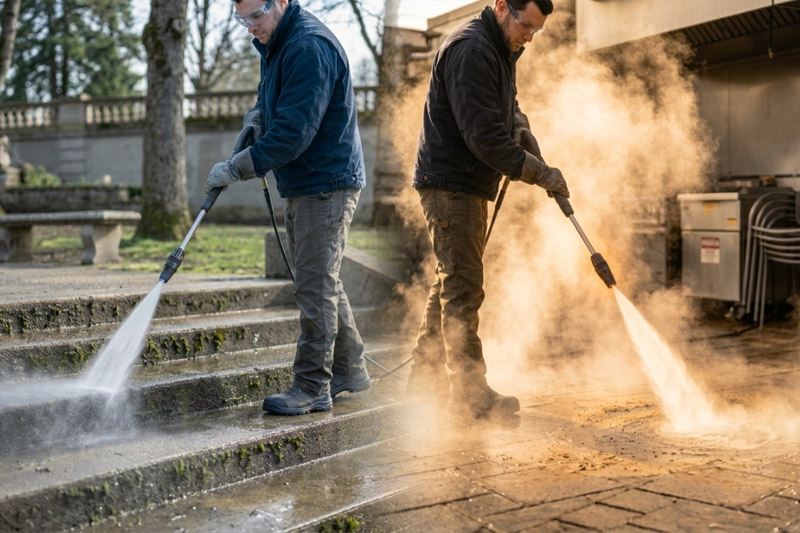
I have heard the terms pressure washing and power washing used as if they mean the exact same thing, and for a long time, I assumed they did too. Once I started paying closer attention, I realized there is one real difference between them that actually matters when I am deciding how to clean my property.
In this guide, I break down what separates these two methods, where each one works best, and how I decide which approach fits a specific job. By the end, I feel confident choosing the right option for my driveway, deck, siding, or any other surface around my home.
Pressure Washing vs Power Washing: The Basic Difference
When I look at pressure washing and power washing, I notice they both rely on the same core idea: blasting water at high pressure to remove dirt, grime, mold, and stains from outdoor surfaces. Because they work in such a similar way, I understand why so many people assume they are the exact same service.
But once I dig a little deeper, I find one key difference that actually separates them. Power washing uses heated water, sometimes reaching very high temperatures, while pressure washing relies on cold water straight from a standard hose. That single detail changes how each method performs against tough buildup like grease, oil, or stubborn mold.
In everyday conversation, I hear people use these two terms interchangeably, and honestly, that is not a huge problem in casual talk. Still, when I am deciding which service I actually need, I always remind myself that the right choice depends on the surface I am cleaning and the type of dirt I am dealing with.
What Is Pressure Washing?
When I think about pressure washing, I define it as a cleaning method that uses cold water pushed through a machine at high pressure, typically somewhere between 1,300 and 2,800 PSI. I find this approach works best on surface level dirt like dust, loose paint, light mold, and general grime that has not fully bonded to the material underneath.
I also like to use pressure washing on concrete, brick, and even wood decks when I am careful with the settings. Since it skips the heating element, I consider it gentler overall, which means I face a lower risk of damaging delicate or sensitive surfaces while still getting a solid clean.
What Is Power Washing?
When I define power washing, I describe it as a method that combines high pressure water with heat, sometimes reaching up to 200 degrees Fahrenheit. I think of it the same way I think about washing dishes, since hot water simply breaks down grease and grime faster than cold water ever could.
Because of that heat, I turn to power washing for tougher jobs like oil stained garage floors, commercial or industrial surfaces, and mold that has really embedded itself into a material. At the same time, I stay cautious with this method, since the combination of heat and pressure can damage softer or more delicate surfaces if I am not paying close attention.
Which One Should You Use? (Pressure Washing vs Power Washing by Surface)
When I match the method to the surface, I usually keep it simple. For driveways and concrete, I lean toward power washing since the heat cuts through oil and ground in stains quickly. For wood decks and fences, I stick with pressure washing at a low setting, and for house siding, I often choose pressure washing or even soft washing to avoid stripping paint or damaging panels.
I also think about the scale of the job. For regular residential tasks around my home, pressure washing usually gets the work done without much risk. When I am dealing with a larger commercial or industrial space, I find power washing more effective, since it handles heavier grime across bigger areas in less time.
Here is a quick comparison I like to reference:
| Factor | Pressure Washing | Power Washing |
|---|---|---|
| Water Temperature | Cold | Hot (up to 200°F) |
| Typical PSI Range | 1,300 to 2,800 | 1,500 to 3,000+ |
| Best Use | Light dirt, dust, mild mold | Grease, oil, embedded mold |
| Damage Risk | Lower | Higher |
I also make it a point to avoid both methods entirely on certain surfaces. I never use high pressure or heat on old, peeling paint, fragile stucco, or aging wood that is already cracked, since either method can make the damage worse instead of solving the problem.
Safety Tips and When to Hire a Professional
When I handle a pressure washer or power washer myself, I stay aware of the real risks involved. Hot water can cause serious burns, the high pressure stream can injure skin on contact, and a wrong setting can easily damage the surface I am trying to clean. Before I start any job, I always put on a few basic protective items.
- Safety goggles to protect my eyes from splashback
- Sturdy gloves to keep a firm grip on the wand
- Non slip footwear, since wet surfaces get slippery fast
I also recognize when a job is beyond what I should handle on my own. If I am facing a large surface area, a high risk of damage, or I simply lack experience with the equipment, I look for a professional instead. A qualified pro listed in a directory like ours typically evaluates the surface, the type of stain, and the right pressure and temperature combination before ever turning on the machine, which gives me confidence that the job gets done safely and correctly.
How to Choose a Pressure Washing Professional
When I look for a professional, I first check whether they have specific experience with the surface I need cleaned, whether that is a wood deck, a concrete driveway, or commercial siding. I also ask directly whether they use cold or hot water for my particular job, since a pro who understands the difference between pressure washing and power washing is more likely to protect my property while still getting an effective clean.
Beyond experience, I always review their insurance coverage and any guarantees they offer on their work. Knowing that a company carries proper insurance gives me peace of mind, since it protects me if any accidental damage happens during the job, and a solid guarantee tells me the professional stands behind the quality of their service.
Common Mistakes to Avoid
When I talk to people who have had a bad experience with a pressure washer, I usually find the problem traces back to a few common mistakes rather than the equipment itself. Avoiding these missteps makes a real difference in protecting my property.
One mistake I try never to make is using too much pressure on wood or painted surfaces. High pressure can strip paint, gouge soft wood, and leave permanent marks that no amount of cleaning can fix afterward.
I also make it a habit to test on a small, hidden area before I tackle the entire surface. This simple step lets me see how the material reacts to the pressure and temperature I have chosen, so I can adjust before I risk damaging something I cannot undo.
Finally, I pay close attention to the angle and distance of the nozzle. Holding it too close or aiming it straight at a delicate spot concentrates the force in one place, which is often exactly how accidental damage happens.
Final Thoughts on Pressure Washing vs Power Washing
When I put everything together, I realize the choice between pressure washing and power washing really comes down to understanding my surface and the type of dirt I am dealing with. Cold water works well for everyday grime, while heat becomes necessary when grease, oil, or deeply embedded mold are involved. Knowing this difference helps me avoid costly mistakes and protects the surfaces I care about most.
Whenever I feel unsure about which method fits my project, or the job feels too big or risky to handle on my own, I reach out to a professional through a directory like ours. That way, I get an experienced eye on the situation, the right equipment for the task, and a finished result that actually holds up over time.